Paint Correction in Rhode Island
Paint correction is not buffing a car until it shines. It is a controlled, measured refinement of your clear coat that permanently removes swirl marks, light scratches, oxidation, and water spot etching so your paint reflects light the way it was built to.
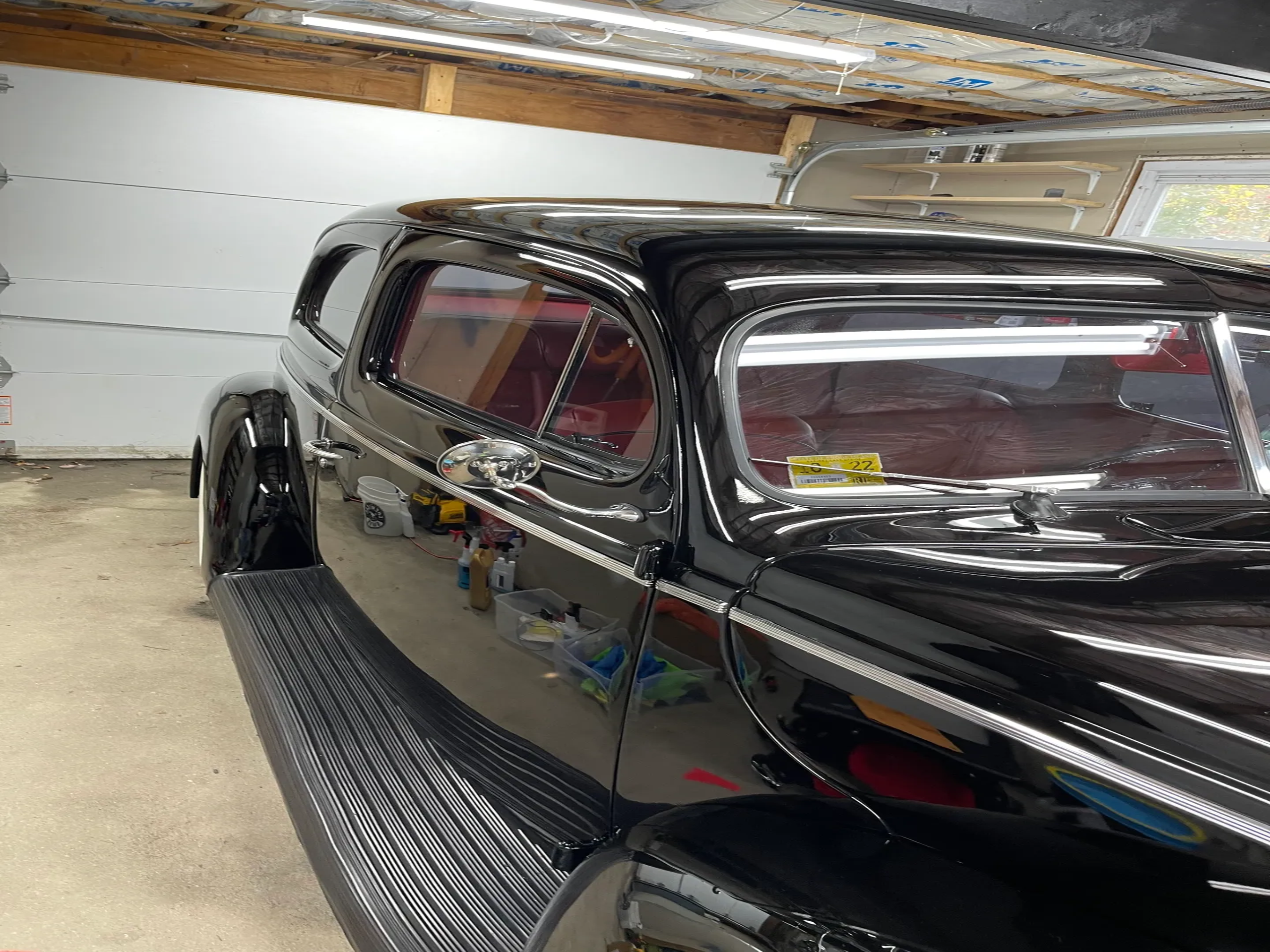

Just want it to look better? We can usually fix that.
A lot of people assume the only way to fix tired-looking paint is a repaint or a body shop estimate. Most of the time that is not true. Swirl marks, hazing, dullness, water spot etching, oxidation, and light scratches all live in the clear coat, and the clear coat can be refined.
Tell us what bothers you about your paint. We will tell you honestly what can be corrected, what can be improved but not eliminated, and the rare case that genuinely needs refinishing. We also handle minor paint touch-up work alongside correction when it makes sense.
Understanding what paint correction really is
Paint correction is one of the most misunderstood yet most important processes in automotive detailing. It is not simply making a car shiny or buffing out scratches. It is a controlled, scientific refinement of a vehicle's clear coat designed to permanently remove surface defects and restore optical clarity to the paint system.
Modern automotive paint is made up of multiple layers, with the clear coat being the top protective layer. This clear coat is what you see, what reflects light, and what determines the overall gloss and depth of your vehicle's finish. Over time, that layer becomes damaged through improper washing, environmental exposure, and everyday use.
Paint correction works by carefully leveling the clear coat at a microscopic level to remove imperfections such as:
- Swirl marks from improper washing techniques
- Light to moderate scratches
- Oxidation and fading
- Water spot etching
- Haze and dullness
- Buffer trails from previous poor polishing work
Why swirled paint looks dull
To understand paint correction, you first have to understand how defects form.
Most swirl marks and micro-scratches are not deep gouges. They are microscopic abrasions in the clear coat caused by friction. This usually happens when dirt is dragged across the surface during washing or drying. Even something as simple as a dirty towel or an automatic car wash brush can introduce thousands of fine scratches.
These imperfections scatter light instead of reflecting it cleanly. That scattering effect is what makes paint look dull, hazy, or spider-webbed under direct sunlight.
Paint correction works by reducing the height difference between the peaks and valleys of these imperfections. By carefully leveling the clear coat, light is able to reflect uniformly again, restoring depth, clarity, and gloss.
The role of clear coat thickness
Every vehicle has a limited amount of clear coat. This is why paint correction has to be performed with precision and knowledge rather than aggression.
We measure and evaluate paint thickness before correction begins. The goal is always to remove the least amount of material necessary to achieve the best possible visual result. Removing more than you need to is not thoroughness. It is damage you cannot undo.
Light Correction
Targets minor swirls and haze. A single step removes about 30 percent of minor swirls and defects, bringing gloss and depth back. Perfect for well maintained vehicles, or anyone who just wants some shine back.
Medium Correction
Removes moderate defects and deeper swirl patterns. A dual action compound and polish clears roughly 50 to 70 percent of deeper swirls and light defects for a deep gloss and luster. Great for daily drivers you want brought back to life.
Heavy Correction
Addresses severe defects, oxidation, and heavily neglected paint, roughly 90 to 95 percent of swirls and scratches. A heavy rotary cutting compound is followed by two dual action compound and polishing steps for showroom condition or better.
Each level requires different pad combinations, polishing compounds, machine speeds, and technique control. Starting prices are for a standard-size car in average condition.
Machine polishing is controlled abrasion, not guesswork
Paint correction is performed using machine polishers paired with specialized pads and compounds, designed to safely abrade the clear coat in a controlled manner.
Cutting stage
Removes defects by leveling the surface.
Finishing stage
Refines the paint to restore maximum gloss and clarity.
The difference between an average result and a professional result comes down to technique, lighting, pad cleanliness, machine control, and product selection.
- Holograms, the buffer trails visible in sunlight
- Micro-marring from dirty pads
- Uneven correction across panels
- Burn-through in extreme cases
This is why paint correction is considered both an art and a science, and why we do not rush it.
Why lighting and inspection matter
Paint defects are often invisible in normal lighting. For that reason, professional paint correction relies heavily on controlled lighting systems.
High-intensity inspection lights reveal:
- Swirl patterns
- RIDS, or random isolated deep scratches
- Holograms
- Surface haze
- Inconsistent polishing results
Without proper lighting it is impossible to achieve a truly corrected finish. Every panel is inspected multiple times throughout the process to ensure uniform results.
The importance of proper surface prep
Before any polishing begins, the paint must be completely decontaminated so no bonded contaminants interfere with the correction process.
Proper preparation includes:
- Thorough hand washing
- Iron and fallout removal to dissolve embedded particles
- Clay bar treatment to remove surface contamination
- Full surface drying and inspection
Skipping this step drags contaminants across the paint during polishing, which causes additional marring and inconsistent results.
How a correction runs at our shop
Inspection under controlled lighting
We identify swirl patterns, RIDS, holograms from previous work, and haze so we know exactly what we are dealing with before touching the paint.
Electronic paint gauge readings
Clear coat thickness is measured across panels. If any area is too thin to correct safely, you get photos and readings and a phone call before we proceed.
Decontamination
Hand wash, iron and fallout removal, clay treatment, then full drying and re-inspection.
Test spot
We dial in the least aggressive pad and compound combination that achieves the result on your specific paint hardness before committing to the whole vehicle.
Cutting stage
Defects are leveled panel by panel with controlled machine work, checking progress against the inspection lights as we go.
Finishing stage
The surface is refined to maximum gloss and clarity, with no holograms, buffer trails, or micro-marring left behind.
Final inspection and protection
Every panel is checked again from multiple angles, then the corrected finish is sealed with a protectant or a ceramic coating if you are having one installed.
What paint correction can and cannot do
Paint correction is extremely effective, but it has limits, and you deserve to know them before you spend money.
- Remove swirl marks and light scratches
- Restore gloss and depth
- Eliminate oxidation and haze
- Improve overall paint clarity
- Repair deep scratches that penetrate the clear coat
- Fix rock chips or missing paint
- Correct panel damage or dents
- Restore paint already burned through or overly thinned
In those cases, refinishing or repainting is required, and we will tell you that rather than take the job.
You do not need a coating to justify a correction
Paint correction is not dependent on any additional service to be valuable. Many vehicles benefit from correction alone, especially:
- Daily drivers with swirl marks
- New vehicles with dealership-installed defects
- Previously detailed cars with improper polishing work
- Enthusiast vehicles needing visual restoration
A properly corrected vehicle already achieves a dramatic transformation in appearance, regardless of any additional protection applied afterward.
The true value of paint correction
The value lies in restoration. It brings back the original optical clarity of your finish and allows the paint to reflect light the way it was designed to. When done correctly, the result is a deep, mirror-like gloss, crisp reflections with no distortion, a smooth refined surface, and a dramatically improved appearance in all lighting conditions. This is not a temporary enhancement. It is a permanent refinement of the paint itself.
Why professional execution matters
Paint correction cannot be rushed or generalized. Every vehicle has different paint hardness, thickness, and defect levels. What works on one car may damage another if applied incorrectly.
Safe material removal
The least amount of clear coat necessary, measured and verified rather than guessed at.
Consistent results across all panels
No one section left brilliant while the rest is half-corrected.
No new defects introduced
No holograms, no buffer trails, no marring from dirty pads or poor technique.
A refined, uniform finish from every angle
Checked under inspection lighting from multiple directions before the car leaves.
Paint correction questions
How much does paint correction cost in Rhode Island?
A one-step correction starts at $500, a two-step starts at $800, and a three-step starts at $1,250 for a standard-size car in average condition. Larger vehicles and heavier defect levels price higher. See pricing in online booking.
Which level of correction does my car need?
It depends on how much defect is in the clear coat and how perfect you want the result. Well maintained vehicles usually only need a one-step. Daily drivers with visible swirls in sunlight generally land on a two-step. Heavily neglected or oxidized paint needs a three-step. Send us photos and we will tell you.
Is paint correction permanent?
The correction itself is permanent, because the defects are physically removed rather than filled. New swirls can be introduced later by improper washing, which is why we recommend protecting the finish afterward and using proper wash technique.
Will you tell me if my paint is too thin to correct?
Yes, always. We measure with a professional-grade electronic paint gauge first. If an area is too thin to correct safely, you get photos and the gauge readings and a call to discuss options before we proceed.
Can you fix a previous detailer's holograms and buffer trails?
Usually, yes. Holograms and buffer trails are surface defects in the clear coat, and correcting them is one of the more common jobs we take on. We will confirm after inspection and a paint measurement.
Do I have to get a ceramic coating with my correction?
No. Correction stands on its own and delivers a dramatic transformation by itself. That said, protecting a freshly corrected finish makes the result last much longer, so most customers add either a sealant or a ceramic coating.
Get an honest read on your paint
See pricing and book online, or send us a few photos in daylight and we will tell you which level of correction your paint actually needs. No upselling.
147 Snake Hill Road, North Scituate, RI 02857 · Serving Providence County